7/13/2026
Ownership Gets Absorbed by Whoever Speaks When the Decision Maker Is Listening.
Navigating a high-stakes client meeting, Ivy reflects on the trained skill of reading the room and owning the narrative before someone else does.
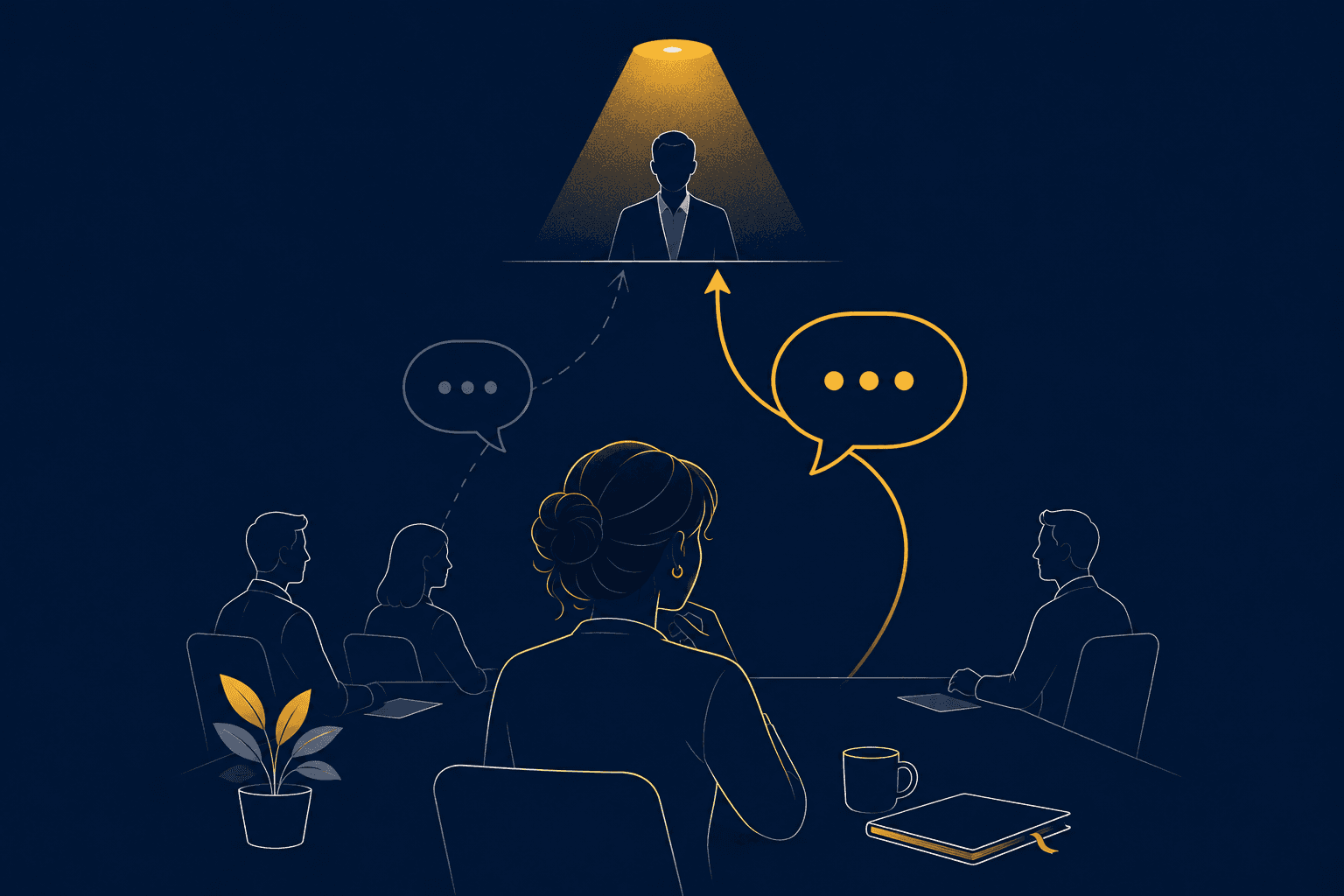
This week I started a new project with a new client. High expectations. Steep learning curve. The kind of onboarding where you're navigating pressure from day one and proving yourself before you've had the chance to find your footing.
Then came a pressure moment.
What Happened in the Room
I identified a decision the client was making that could impact our team, our engagement, and the entire trajectory of the project. I brought it to leadership quickly. Leadership decided to pull in someone new — a fresh face for the client-facing moment. The framing was simple: "You two will work together on this."
A collaboration. That was how it was set up.
In the meeting, I provided the background and context that framed the entire conversation — the issue, the risk, the thinking behind the escalation. Everything that set the table.
Partway through, the person I was supposed to be working with took over. Summarized the situation. And then, with the VP present and listening, started assigning next steps out loud — without any prior discussion.
Ivy is going to do this. Ivy is going to do that.
It lasted less than a minute. And it has been sitting with me ever since.
Why This Moment Matters
I recognized it immediately as one of those micro pressure moments that plays out in many versions across every workplace. Most people don't fully understand what is actually happening when it does. And by the time they do, the window to correct the narrative is already closed.
This is not about taking credit. It is not about who is difficult or easy to work with.
It is about visibility and ownership.
The groundwork was done. The issue was identified, escalated, and framed — all before anyone walked into that room. But the moment the decision maker was on the call and listening, someone else stepped in, took what had been prepared, spoke in a leadership tone, and shaped the narrative.
The Skill Most People Miss
Here is what most people overlook about that moment: what she did was not personality. It was not something she was born with. It was a trained skill.
She read the room. She spotted the moment the VP became present. She shaped the narrative quickly in her head and delivered it with precision and confidence. Intentional. Deliberate. Built from practice and muscle memory.
That is the part worth understanding — because the same applies to how you respond to it.
Key takeaway: Spotting the moment, speaking in it, and owning the narrative afterward are all trainable skills. The person who shapes the room is not always the most prepared — they're the most practiced at recognizing when to step forward.
The One Thing to Do Differently
Before the meeting starts, send a short pre-read to the key decision maker. Two to three sentences: what you identified, what you have been working on, what you are bringing to the table.
Then, when the meeting opens, name your role before anyone else sets the frame.
Try this: Open with something direct — "I identified this issue and have been leading the diagnostic. Let me walk us through what I found." — before anyone else has the chance to reframe it.
Ownership and the Decision Maker's Attention
Ownership does not get absorbed by whoever speaks last. It gets absorbed by whoever speaks when the decision maker is listening.
The window to establish yours is before that person is even in the room.
That's Clarity Under Pressure. Deliver with clarity. Be seen with integrity.
— Ivy