By Ivy Lewis ·
The Project Was Done Backwards. Now You're Asked to Make It Work.
When a project arrives already in motion, the instinct is to push forward without questioning the foundation. Making your thinking visible and mapping solutions to real business needs is how you turn a backward process into a better decision.
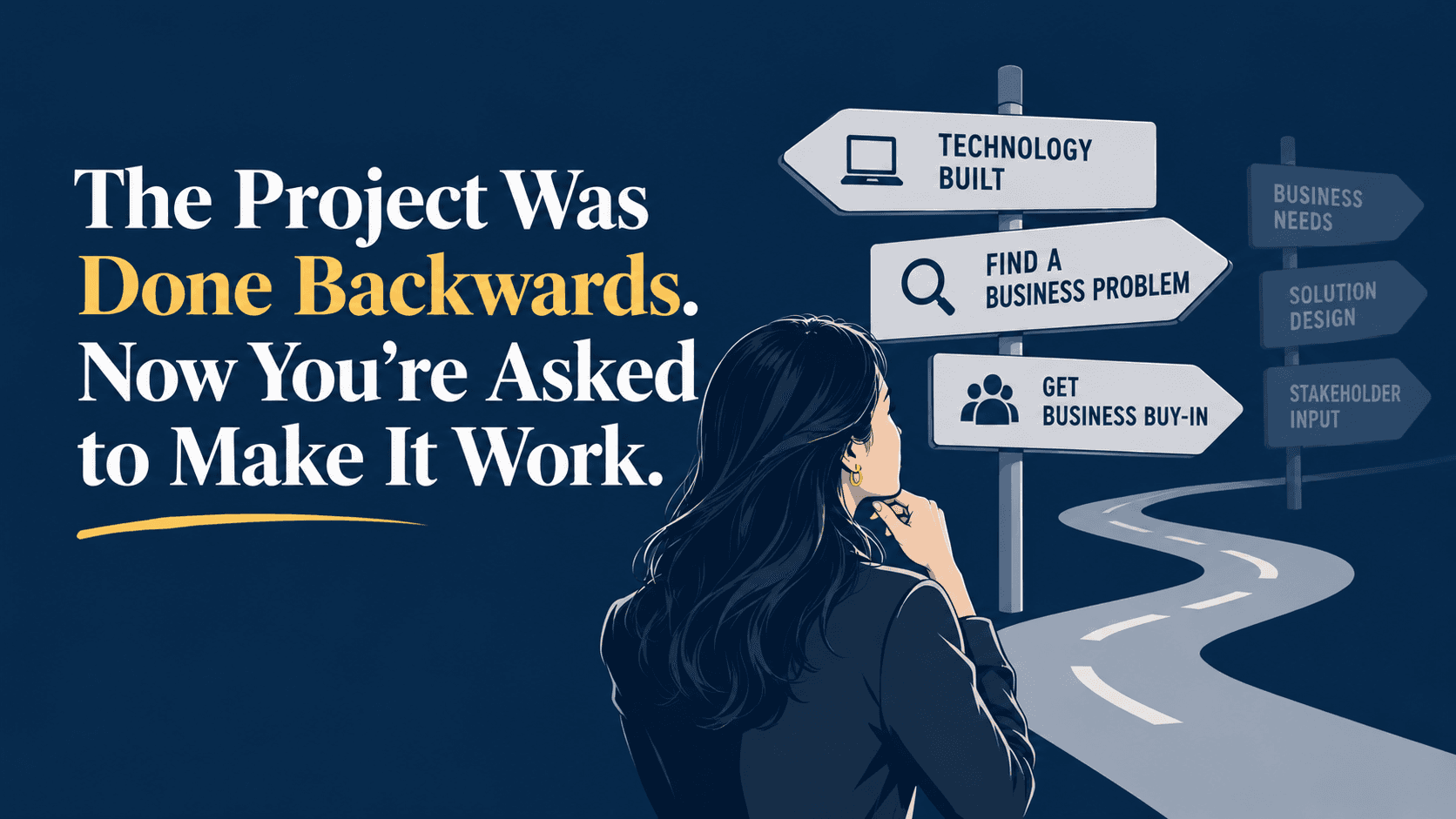
When you're asked to move something forward, even though the process is running backward.
"Can you help us convince the business stakeholders that this is the technology they need?"
That was the request.
The technology had already been developed. Time and resources had been invested. Now the team needed business buy-in.
There was just one problem.
We didn't actually know what business problem this technology was solving.
The solution had largely been developed from a technology perspective, without enough input from the business stakeholders. Now we needed to understand their pain points, identify where they were experiencing friction, and see whether the technology could deliver value against those needs.
Essentially, we were working backward.
This really isn't how the process should work.
The Pressure of Making a Backward Process Work
Ideally, we start with a business problem, understand the desired outcome, and then determine what technology can help us get there.
But projects don't always arrive at our doorstep in the ideal order. Sometimes significant work has already happened before we're brought into the conversation.
I actually see being asked to help as a positive sign. It means someone trusts us to contribute beyond simply managing the delivery.
But it also creates pressure.
How do you support the business in moving forward without blindly accepting an approach you believe should have been different?
You can recognize that the process is backward without assuming the technology has no value. The question is what you do next.
Make Your Thinking and Approach Visible
In this situation, I wouldn't start by preparing a presentation to convince stakeholders. I'd explain how I propose to approach the problem.
A three-step approach
- Understand the business pain points.
Talk with stakeholders. Find out what's creating friction, where they're losing time, and what outcomes matter most. - Map the technology to those needs.
Look at what the technology can actually deliver. Where does it address a meaningful problem? Where is the fit weak or still uncertain? - Make a recommendation based on what we learn.
Perhaps there's a strong use case worth pursuing. Perhaps we need to adjust the solution or test it with a smaller group first. And if the fit isn't there, we need to be willing to say that, too.
I'd make this approach clear to the people asking for help — not just what activities we'll complete, but why we're taking these steps and what decisions the findings will support.
That way, stakeholders can see the reasoning behind the work, not just the deliverables.
Key takeaway: Making your thinking visible changes what people see. They begin to understand not just your ability to execute, but how you assess a situation, navigate trade-offs, and help shape direction.
There's an Opportunity in Moments Like This
We may not be able to change how the project started. But we can help the organization make a better decision about what happens next.
As we work through the situation, we can also make recommendations about how to approach similar initiatives in the future — for example:
- Involving business stakeholders earlier in the process
- Validating use cases before development begins
- Establishing clearer business outcomes from the start
The point isn't to criticize decisions that have already been made. It's to help the organization learn from the experience.
The Bigger Lesson
Not every opportunity to demonstrate leadership comes from a project that's set up perfectly.
Sometimes it comes when things are messy, the sequence isn't ideal, and someone asks you to help find a way forward.
You don't have to agree with every decision that brought the project to this point. But you can recognize the reality, create a clear approach, and help people make the next decision better.
Try this: The next time you're handed a backward process, resist the urge to immediately produce deliverables. Instead, articulate your approach first — what you'll explore, why, and what decision it will inform.
That's how you move from running projects to shaping decisions.
Don't wait for clarity. Create it.