7/27/2026
When Escalation Becomes the Noise That Slows Everything Down
Escalation feels like leadership under pressure, but it often protects the person escalating more than the project itself. The noise it generates can slow delivery more than the original problem ever would.
When Escalation Becomes the Noise That Slows Everything Down
I recently finished a project. Reflecting back, there is one moment that stays vivid.
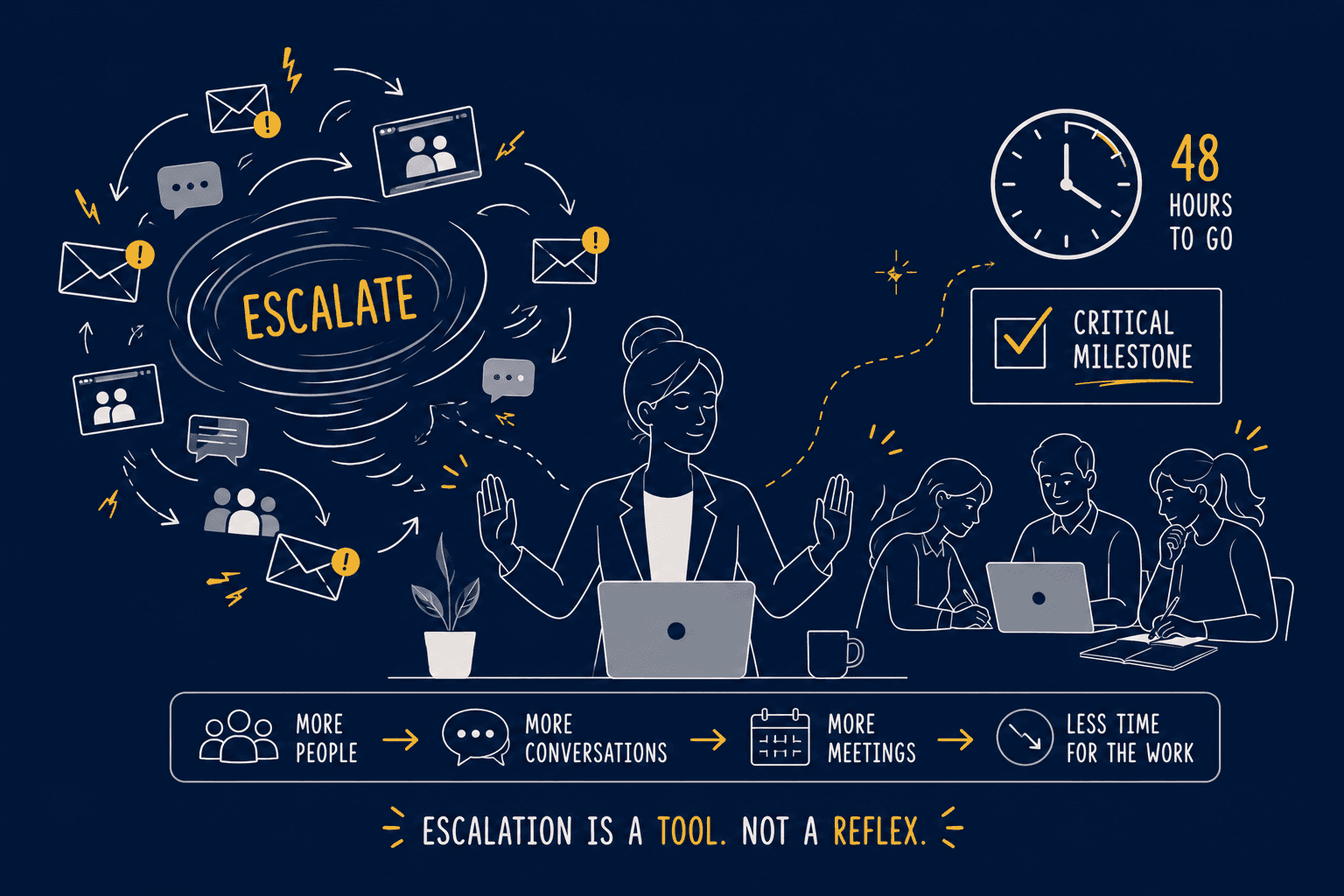
We were forty-eight hours from a critical milestone. High-pace environment. Everything moving at lightning speed. Every conversation was about the deadline. Every meeting was about status. And one word kept showing up in every room, every email, every message thread.
Escalate.
I need to escalate this. Should we escalate? If you need help, let me know — I will escalate.
How Escalation Became the Crisis
By the time the meetings ended, the escalation emails began. Which triggered more meetings. More stakeholders pulled in. More people wanting to understand what was happening. More status meetings requested. And those status meetings triggered follow-up meetings — more conversations with more people about the work that was supposed to be getting done.
By end of day, the meetings triggered by escalation — and the follow-ups from those escalations — had dominated the hours that were supposed to be spent delivering the milestone.
If I had to describe that day with one word? Chaos.
What I Did Instead
What I found myself doing in the middle of all of it was the opposite of what everyone around me was doing.
De-escalating. Calming people down. Asking for one more hour. Believing the team could get it done without pulling in more voices, more pressure, more noise.
And most of the time — they did.
What Is Really Happening When Everyone Reaches for Escalation
Here is the micro-pressure moment most people miss in environments like this one.
Escalation feels like action. It feels like leadership. It feels like doing something when things are at risk.
But most of the time, escalation in a high-pressure sprint is not about solving the problem. It is about protecting the person escalating.
The hidden motives behind the reflex
- Raising awareness so that if something fails, they are on record as having flagged it.
- Creating urgency by putting more pressure on people already under maximum pressure.
- Making it visible to leadership so nobody can say they did not know.
What gets missed is the cost of all of that. Every escalation creates a conversation. Every conversation pulls people out of the work. And in a forty-eight-hour sprint to a milestone, the noise of escalation can slow down delivery more than the original problem ever would have.
Key takeaway: Escalation often protects the person escalating — not the project. The noise it generates can do more damage than the problem it was meant to flag.
The One Question to Ask Before You Escalate
Will this create more work than it solves?
If the answer is yes — de-escalate. Buy the team one more hour. Trust the process already in motion.
Try this: Before your next escalation, pause and ask whether the conversation you are about to create will cost more than the problem you are trying to solve. If it will, hold. Give the team the time and space to deliver.
Escalation is a tool. Not a reflex.